|
The AWAWS Academic Mentoring Program is now in its second year and we are seeking expressions of interest from potential mentees interested participating in the 2021 program. The program, based on the Spectrum Academic Mentoring Program, aims to establish a supportive mentoring culture and provide opportunities to connect individuals from diverse backgrounds and with different levels of experience from across the Australasian ancient world studies community. The establishment of mentoring relationships provides numerous benefits, fostering personal and professional growth. By sharing knowledge, skills, attitudes and behaviours, a mentoring relationship can:
There are 31 mentors in the program with capacity to mentor over 70 mentees across a broad range of areas, from research and learning and teaching, to career progression within and beyond academia. Check out the Meet Our Mentors page for detailed mentor profiles. To participate in the program you will need to submit an Expression of Interest form (download below) to the program’s interim coordinator, Sarah Midford, at s.midford@latrobe.edu.au. There is no deadline to submit EoIs, but each mentor has a limit on the number of mentees they can take on. If you have a particular mentor you would like to work with, it is advisable to get in earlier rather than later. You will need to be a current member to participate. If you aren’t sure of your membership status you can email socawaws@gmail.com to check. If you need to renew, then visit the Membership page to join. We look forward to welcoming you into the program! If you have any questions at all, just get in touch with Sarah Midford. 
0 Comments
In case you missed it!
Professor Gina Walker delivered this lecture as part of our recent 'Modern' Women of the Past? Unearthing Gender and Antiquity conference. In this lecture Professor Walker juxtaposed the stark reality of millennia of ignorance about earlier female figures and their authority as knowers in the context of sixty years of contemporary Feminist Historical Recovery that '‘Modern’ Women of the Past? Unearthing Gender and Antiquity' celebrates. Dr Walker described the New Historia initiative she directs at The New School with a global collaborative of researchers who are producing authoritative “female biographies” of attested female figures on various platforms for new audiences. She asked, does the avalanche of fresh data about women demand new knowledge-ordering systems that for the first time include a female dimension?
In case you missed it!
Dr Rachel Pope gave a rousing keynote lecture at our recent conference 'Modern' Women of the Past? Unearthing Gender and Antiquity. This lecture provides a perspective from the UK and Europe on how preventing women’s access to academia and the heritage sector, both historically, and in our contemporary workplace culture, has impacted our understanding of women in the past. We discovered the irony that, under the banner of objective practice, late twentieth century archaeologists actively erased past women, or wrote them specifically into domestic roles. We investigated the mechanism through which scholars sought to undermine women’s authority in the past, and in the writing too of disciplinary histories, in favour of patriarchal mythmaking, and how that practice lingers on today. We saw how a generation of young scholars had to fight to correct this inherited academic problem in archaeological practice, outside the mainstream, and how a new generation of scholars are now working beyond binary, developing applied method in gender archaeology, to discover the past more as it was, and less in our making.
Note to membersWe're writing to wish you all a very Happy International Women's Day. The theme this year is very fittingly 'Choose to Challenge'
International Women's Day 2021 International Women's Day (March 8) is a global day celebrating the social, economic, cultural, and political achievements of women. The day also marks a call to action for accelerating women's equality. IWD has occurred for well over a century, with the first IWD gathering in 1911 supported by over a million people. AWAWS celebrated International Women's Day this year by co-sponsoring an online conference "'Modern' Women of the Past? Unearthing Gender and Antiquity' from 5-7 March. It was a truly international conference with 409 delegates and close to 140 institutions represented, from Australasia, Africa, India, the UK & Europe, the Middle East and North and South America. Brilliantly, we had 64 papers delivered by scholars from a dozen different countries around the world. We were also treated to two outstanding keynote lectures. The first, by the dynamic Dr Rachel Pope (@preshitorian) from the University of Liverpool and Founder and Director of British Women Archaeologists, was entitled "Women in the Present, Women in the Past". Rachel examined, in the context of the UK and Europe, how preventing women’s access to academia and the heritage sector, both in the past and in the contemporary workplace, has impacted our understanding of women in the past. The other keynote delivered by Professor Gina Luria Walker, Professor of Women's Studies and Director of The Center for The New Historia (@TheNewHistoria), The New School, New York city, was entitled "Where are the Women in Eternity?" and juxtaposed the reality of millennia of ignorance about earlier female figures in the context of sixty years of Feminist Historical Recovery. If you were unable to listen to these two lectures, please stay tuned as links to the recordings will appear on the AWAWS website in the very near future! With warmest wishes and have a fabulous day! The AWAWS Executive Committee Watch this space!As we begin a new year, our mentoring program will be refreshed with mentees and mentors being added to the program. If you have submitted an expression of interest email or form and haven't heard back from us please get in touch with our interim program co-ordinator Dr Sarah Midford S.Midford@latrobe.edu.au.
Thank you to everyone who has reached out around accessing information on our website. Your feedback is most helpful for running this site and making sure we provide you with all the details you need to participate in the program. Keep an eye out on your emails over the next few weeks for all the latest from our mentoring program and how you can join as a mentor or as a mentee. 'Modern' women of the past? Unearthing gender and antiquity.AWAWS, AAIA, CCANESA, CCWM and the University of Sydney Departments of Archaeology and Classics & Ancient History are hosting an online conference on Modern Women of the Past? Unearthing Gender and Antiquity, to be held over 5-6 March 2021, ahead of this year's International Women’s Day (8 March 2021).
Keynote Lecture |
|||||||||||||||
| This keynote provides a perspective from the UK and Europe on how preventing women’s access to academia and the heritage sector, both historically, and in our contemporary workplace culture, has impacted our understanding of women in the past. We discover the irony that, under the banner of objective practice, late twentieth century archaeologists actively erased past women, or wrote them specifically into domestic roles. We investigate the mechanism through which scholars sought to undermine women’s authority in the past, and in the writing too of disciplinary histories, in favour of patriarchal mythmaking, and how that practice lingers on today. We see how a generation of young scholars had to fight to correct this inherited academic problem in archaeological practice, outside the mainstream, and how a new generation of scholars are now working beyond binary, developing applied method in gender archaeology, to discover the past more as it was, and less in our making. | 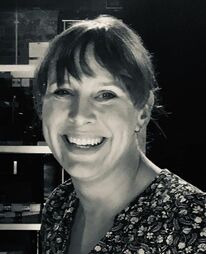 |
Speaker: Dr Rachel Pope, Senior Lecturer in European Prehistory, Liverpool University, Founder and a Director of British Women Archaeologists.
When: 7.45pm (AEDT) Friday 5th March
Note: Speaker will be presenting from Liverpool, UK at 8.45am GMT, Friday 5th March.
RSVP: Click here to register via eventbrite
When: 7.45pm (AEDT) Friday 5th March
Note: Speaker will be presenting from Liverpool, UK at 8.45am GMT, Friday 5th March.
RSVP: Click here to register via eventbrite
Keynote Lecture
"Where are the Women in Eternity?" by Professor Gina Walker
| Where are the Women in Eternity juxtaposes the stark reality of millennia of ignorance about earlier female figures and their authority as knowers in the context of sixty years of contemporary Feminist Historical Recovery that ‘Modern’ Women of the Past? Unearthing Gender and Antiquity celebrates. I describe The New Historia initiative which I direct at The New School with a global collaborative of researchers who are producing authoritative “female biographies” of attested female figures on various platforms for new audiences. I ask, does the avalanche of fresh data about women demand new knowledge-ordering systems that for the first time include a female dimension? | 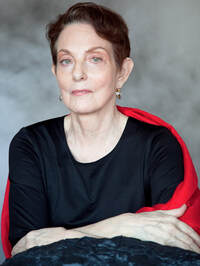 |
Speaker: Professor Gina Walker, Professor of Women's Studies and Director of The Center for The New Historia, The New School.
When: 9.30am (AEDT) Saturday 6th March
Note: Speaker will be presenting from New York, USA at 5.30pm EST, Friday 5th March.
RSVP: Click here to register via eventbrite
When: 9.30am (AEDT) Saturday 6th March
Note: Speaker will be presenting from New York, USA at 5.30pm EST, Friday 5th March.
RSVP: Click here to register via eventbrite
Contact us
If you have any questions about the conference or our key note lectures you can contact the conference convenors via unearthingwomen@gmail.com
The AWAWS ASCS members meeting will be held online Thursday, February 4th at 12.00 midday AEST.
In the meeting we will briefly report on our activities during the past year, announce the winner of our Annual Research grant and, most importantly, hear from you about what you’d like to see the organization do in 2021!
If you haven't renewed your membership for AWAWS now is the time to do so! Renew your membership online.
Normally we hold during ASCS conference, but to avoid zoom fatigue we are a week ahead this year.
Links to join via Zoom will be sent directly to members via email. If you have not received a link, or have questions about your membership, please email us socawaws@gmail.com
In the meeting we will briefly report on our activities during the past year, announce the winner of our Annual Research grant and, most importantly, hear from you about what you’d like to see the organization do in 2021!
If you haven't renewed your membership for AWAWS now is the time to do so! Renew your membership online.
Normally we hold during ASCS conference, but to avoid zoom fatigue we are a week ahead this year.
Links to join via Zoom will be sent directly to members via email. If you have not received a link, or have questions about your membership, please email us socawaws@gmail.com
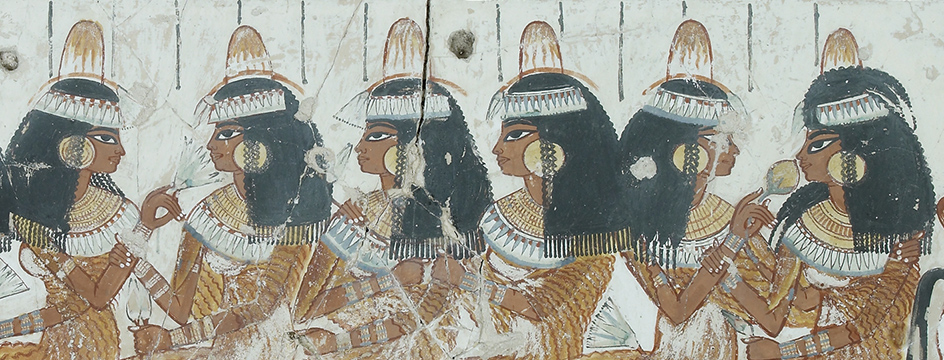
Detail of wall painting from Tomb-chapel of Nebamun, circa 1350BC. British Museum EA37986
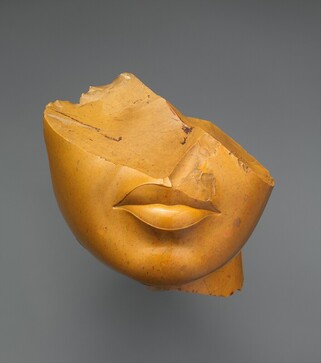 Fragmentof a Queen's Face ca. 1353–1336 BCE, New Kingdom, Amarna Period. Metropolitan Museum of Art (26.7.1396)
 The AAIA, CCANESA, AWAWS, CCWM and the University of Sydney Departments of Archaeology and Classics & Ancient History warmly invite abstracts for our forthcoming conference on the reception of ancient women, to be held over 5-6 March 2021, ahead of International Women's Day, 8 March 2021.
Despite restrictions on their autonomy from the (mostly) patriarchal societies in which they lived, women of the past were astronomers, chemists, warriors, politicians, philosophers, and medical practitioners (to mention just a few examples). Women strove to understand the world around them, and through their observations and innovations, they demonstrated that gender provides no barrier to participating and excelling in a full range of human endeavours.
This conference sets out to tell the frequently neglected history of such women. It illuminates the remarkable historical contributions of the invisible pioneers of the past, andconsiders how a distorted perception of past women has shaped the realities and inequalities of our modern world. In the 21stcentury, a balanced representation of gender across a diverse range of societies and cultures remains a work in progress, and a more complete understanding of our past may remedy distorted perceptions of women’s capacities and contributions, both historically and as we move into the future.
The conference organisers invite abstracts (200 words max.) for papers of 15 minutes length. The conference timeframe is broadly imagined to include global women’s history and its reception, from prehistory to late antiquity. Diverse geographic, disciplinary, cultural, and conceptual responses to this theme are encouraged: calling on all disciplines ranging from archaeology to popular culture studies and everything in between.
Pre-history and antiquity are defined globally, with an understanding of culturally and geographically diverse timescales, and we encourage responses from First Nations perspectives. Our theme of ‘women’ is intended to include trans and non-binary women, who are encouraged to participate in our exploration on the shaping of history through conceptions of gender. Postgraduate students and early career researchers from any discipline are encouraged to submit an abstract.
Abstracts should be submitted by Monday 30th November, 2020 via email to unearthingwomen@gmail.com
Despite restrictions on their autonomy from the (mostly) patriarchal societies in which they lived, women of the past were astronomers, chemists, warriors, politicians, philosophers, and medical practitioners (to mention just a few examples). Women strove to understand the world around them, and through their observations and innovations, they demonstrated that gender provides no barrier to participating and excelling in a full range of human endeavours.
This conference sets out to tell the frequently neglected history of such women. It illuminates the remarkable historical contributions of the invisible pioneers of the past, andconsiders how a distorted perception of past women has shaped the realities and inequalities of our modern world. In the 21stcentury, a balanced representation of gender across a diverse range of societies and cultures remains a work in progress, and a more complete understanding of our past may remedy distorted perceptions of women’s capacities and contributions, both historically and as we move into the future.
The conference organisers invite abstracts (200 words max.) for papers of 15 minutes length. The conference timeframe is broadly imagined to include global women’s history and its reception, from prehistory to late antiquity. Diverse geographic, disciplinary, cultural, and conceptual responses to this theme are encouraged: calling on all disciplines ranging from archaeology to popular culture studies and everything in between.
Pre-history and antiquity are defined globally, with an understanding of culturally and geographically diverse timescales, and we encourage responses from First Nations perspectives. Our theme of ‘women’ is intended to include trans and non-binary women, who are encouraged to participate in our exploration on the shaping of history through conceptions of gender. Postgraduate students and early career researchers from any discipline are encouraged to submit an abstract.
Abstracts should be submitted by Monday 30th November, 2020 via email to unearthingwomen@gmail.com
Download our call for papers: | 
| ||
We are calling for nominations for the role of Interim Postgraduate Representative, a role which would be held until the end of June 2021. Very sadly, the incumbent, Alyce Cannon, is unable to continue in her role due to personal issues.
The postgraduate representative
If you would like to nominate yourself or another member, please email socawaws@gmail.com by Friday 11th of September. Please include in that email 1) the nominee's name; and 2) institution. If you are nominating another member, please first seek their approval. All nominees must be financial members of the organization.
If only one nomination is received, then the society's Rules state that the nominee is deemed to be elected. If more than one nomination is received, voting will open on Monday 14th September.
Please rest assured that the new Postgraduate Representative will be guided through the relevant responsibilities. This is a recurring commitment throughout the year, but it is not overly burdensome, and it is an excellent opportunity to develop working relationships with scholars throughout New Zealand and Australia.
Nominate yourself, or colleague, today!
socawaws@gmail.com
The postgraduate representative
- Advocates for the postgraduate membership
- Monitors postgraduate conferences, events, concerns and issues
- Liaises with the organizers of the AMPHORAE conference on behalf of AWAWS
If you would like to nominate yourself or another member, please email socawaws@gmail.com by Friday 11th of September. Please include in that email 1) the nominee's name; and 2) institution. If you are nominating another member, please first seek their approval. All nominees must be financial members of the organization.
If only one nomination is received, then the society's Rules state that the nominee is deemed to be elected. If more than one nomination is received, voting will open on Monday 14th September.
Please rest assured that the new Postgraduate Representative will be guided through the relevant responsibilities. This is a recurring commitment throughout the year, but it is not overly burdensome, and it is an excellent opportunity to develop working relationships with scholars throughout New Zealand and Australia.
Nominate yourself, or colleague, today!
socawaws@gmail.com
Categories
All
Announcements
Conferences
Disablism In AWS
Lectures And Talks
Mentoring Program
Review
About this page
Find all of our latest news and announcements including upcoming events, new research and local chapter updates.
Archives
December 2021
September 2021
July 2021
June 2021
May 2021
April 2021
March 2021
February 2021
September 2020
August 2020
July 2020
June 2020
 RSS Feed